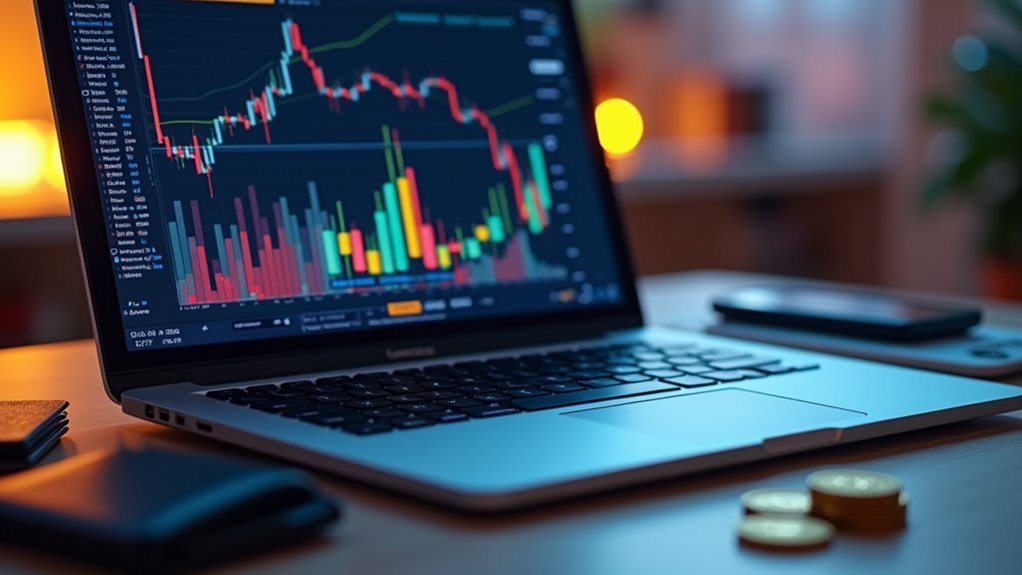

Now, if you’re ready to plunge in, the first step is choosing a crypto exchange. Think of it as picking a grocery store for your Bitcoin: you want a place that’s not only popular, like Binance or Coinbase, but also secure.
Some exchanges are centralized, while others are decentralized—imagine shopping at a big chain versus a quirky local market. Security is key, so look for those with strong measures in place, because nobody wants their coins swiped faster than a kid at a candy store. Many exchanges offer a variety of payment methods, so make sure to choose one that accepts your preferred option. Additionally, consider that Bitcoin’s value is highly volatile, which can affect your purchasing power due to market demand. Understanding market trends can also help inform your buying decisions.
Centralized or decentralized, choose your exchange wisely—security is crucial to keep your coins safe from sneaky hands!
Once you’ve got your exchange, it’s time to set up a cryptocurrency wallet. This is your digital wallet, but it won’t hold your cash; it will hold your precious Bitcoin.
Hardware wallets offer fortress-like security while software wallets are convenient but a bit like leaving your front door ajar. Always back up your wallet and guard that recovery phrase like it’s the last piece of pizza at a party.
Finally, let’s talk about making that purchase. You can pay with bank accounts, debit cards, or even through Bitcoin ATMs—though beware, they come with their own price tag.
Whether you go for a market order to snag Bitcoin at its current price or a limit order to wait for a better deal, always double-check the transaction details. Because in the world of Bitcoin, excitement can turn into regret faster than you can say “blockchain.”