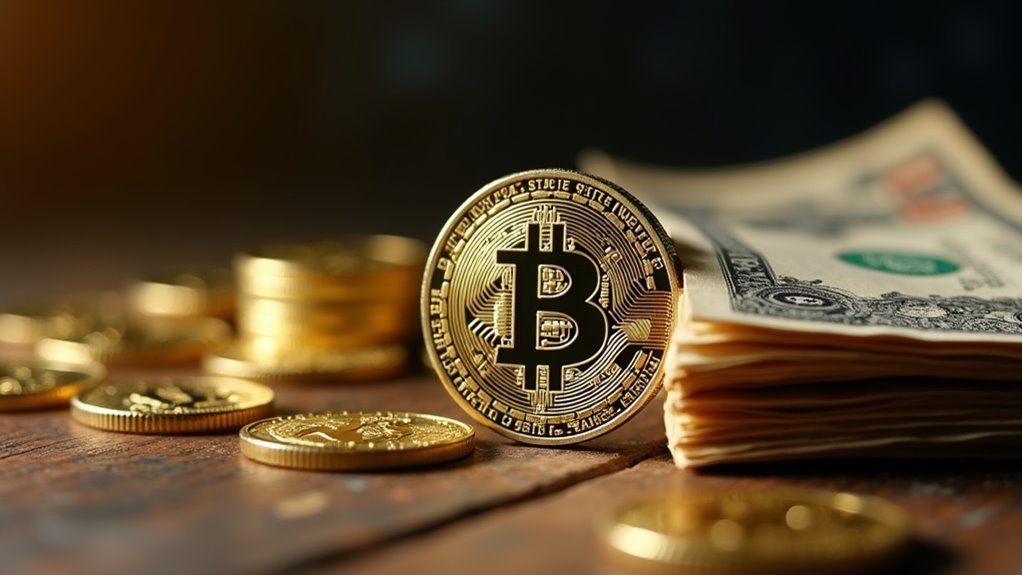

As humanity evolved, so too did the way it traded and valued goods, leading to the intriguing journey of money that is recognized today. Imagine trying to swap a cow for a few loaves of bread—hardly practical, right? This is where bartering stepped in around 6000 BC, allowing people to exchange goods and services directly.
But as charming as it was, bartering had its limits. Who wants to haul a goat around town for a pair of shoes? Enter early forms of money: cowry shells, grains, and even cattle. They simplified trade and started to standardize value.
Fast forward to the 7th century BC, when the first metal coins made their debut in Lydia and China. These shiny little disks, initially crafted from an alloy of gold and silver called electrum, were more durable and portable than any previous currency. Cowrie shells were among the first standardized forms of barter that paved the way for these early coins. This innovation in currency marked a significant shift towards decentralized digital ledgers, which would later influence the emergence of cryptocurrencies.
The 7th century BC marked a revolutionary leap with the introduction of durable metal coins, forever changing trade dynamics.
With official stamps, these coins marked the dawn of centralized currency control, paving the way for a more organized economy. The ancient Greeks and Persians soon adopted them, proving that shiny objects have always had a way of fascinating human attention.
Then came paper money in 1020 AD, introduced in China as a portable alternative. Initially, these were just receipts for deposited goods, but they soon evolved into government-issued currency. The introduction of paper money helped facilitate trade on a much larger scale, allowing for greater economic growth.
However, just like that friend who borrows money and never pays you back, paper money faced issues like rapid depreciation.
By the early 19th century, the gold standard was all the rage, fixing currency values to gold reserves—stability at its finest! But economic shifts led to its decline, culminating in the fiat currency era post-1971, where money was no longer tied to gold.
This shift allowed for greater flexibility but came with inflation concerns.
And now, enter the digital age. Bitcoin emerged in 2008 as a decentralized currency, proving that money could exist without banks.
The evolution of money continues, showing that while forms may change, the quest for value remains timeless.