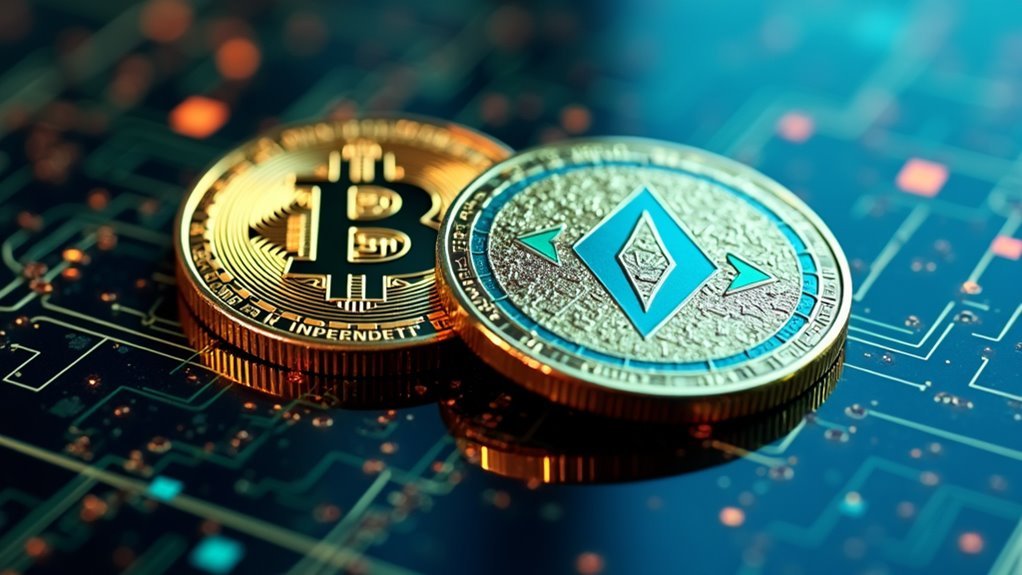

In the bustling world of digital assets, understanding the distinctions between coins and tokens is akin to knowing the difference between a dog and a cat—both are beloved companions in the sphere of finance, yet each brings its own unique flair to the table.
Coins, like Bitcoin, strut around on their own independent blockchains, proudly serving as the primary medium of exchange. Meanwhile, tokens, such as those pesky ERC-20 types like DAI and LINK, play nice on existing blockchains, showcasing a broader range of functionalities that would make even Swiss Army knives green with envy. Coins primarily used as means of exchange make them a straightforward choice for transactions. The distinction between coins and tokens is crucial for understanding their roles in the market.
Coins proudly march on their own blockchains, while tokens charm us with their multifunctional flair on established networks.
The infrastructure of these digital darlings is where the fun really begins. Coins boast their own networks, consensus mechanisms, and protocols. Creating one is like building a fortress from scratch—complex and resource-intensive. Coins operate independently on their own network allows them to maintain a high level of security and decentralization.
Tokens, however, are the charming guests who arrive at the party, utilizing the infrastructure of established blockchains. This makes their creation a breeze, akin to borrowing a friend’s Wi-Fi for a Netflix binge.
Functionality also sets these two apart. Coins primarily serve as a medium of exchange or store of value, while tokens flaunt diverse use cases, from granting access to decentralized applications (DApps) to representing real-world assets like art. They can even wield governance power in decentralized organizations, making them the political activists of the digital sphere.
Market dynamics add another layer of complexity. Coins derive value from their independent networks, while tokens’ worth often hinges on their ecosystem, which could feel like being the star of a show or just a supporting character.
Understanding these distinctions is essential, especially in a landscape where regulatory classifications can turn a token into a security or utility overnight.