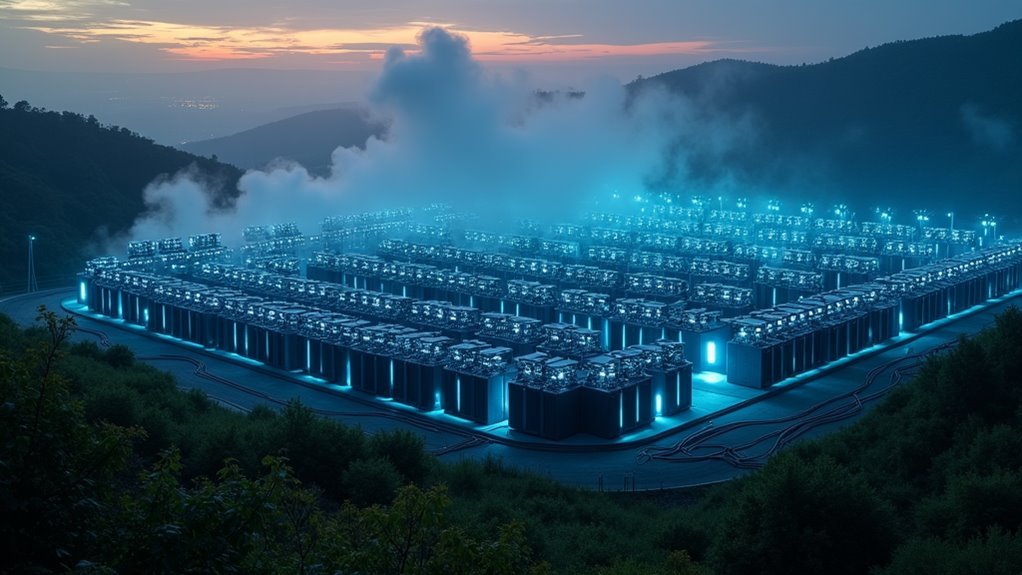

In the ever-evolving world of cryptocurrency, Bitcoin stands out not just for its market value but also for its staggering energy consumption—think of it as the heavyweight champion of digital currencies, burning through energy like a teenager devouring pizza at a late-night study session.
This digital titan consumes between 91 to 172 terawatt-hours annually, a figure that surprisingly exceeds the energy use of entire countries like Poland and Argentina. When you consider that Bitcoin’s energy usage makes up about 0.5% of global consumption, it’s clear that this currency packs a punch. Additionally, Bitcoin’s energy consumption compares to the energy used by the USA, highlighting its immense scale.
The primary culprit behind Bitcoin’s insatiable appetite for energy is its Proof of Work (PoW) mechanism, which requires jaw-dropping computing power. This method of securing transactions is often criticized for its environmental impact, as it demands vast amounts of electricity to operate efficiently.
Picture miners as competitive athletes in a never-ending race, each one trying to outdo the other while burning massive amounts of electricity. This decentralized effort leads to a continually rising demand for energy, without much regard for sustainable practices, thanks to a lack of regulation.
Miners are like athletes in a relentless race, fueling their competition with an insatiable appetite for energy.
What makes matters worse is Bitcoin’s carbon footprint, estimated at around 65 to 68 million metric tons of CO2 annually—equivalent to the emissions of entire nations like Greece.
While nearly 52% of Bitcoin mining taps into renewable energy sources, primarily hydropower, a significant portion still relies on fossil fuels, casting a long shadow over its environmental impact. Proof of Work mining exploits public resources for private gain, raising ethical concerns.
Despite the growing awareness and initiatives aimed at sustainable practices, such as carbon offsetting and energy-efficient cryptocurrencies, Bitcoin’s core design makes a switch to less energy-intensive methods unlikely.
The industry is buzzing with potential for innovations, including the shift to Proof of Stake (PoS) seen in Ethereum, but Bitcoin seems resolute in sticking to its heavyweight ways.
In this high-stakes game of energy consumption, Bitcoin’s future remains a mixed bag of challenges and opportunities, balancing the need for security with the pressing call for environmental responsibility.