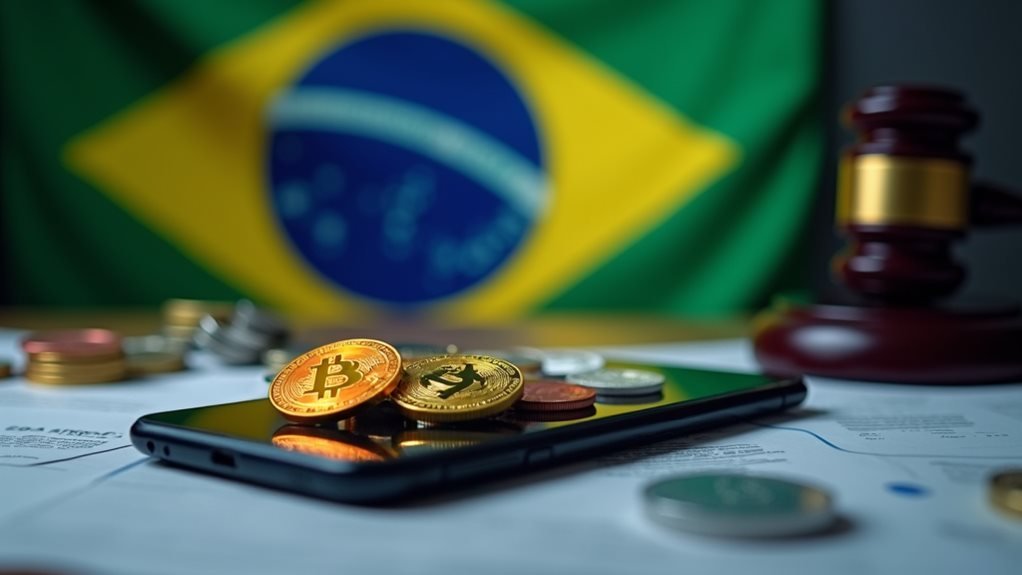

In a groundbreaking move that’s shaking up the financial landscape, Brazil’s Superior Court of Justice has unanimously decided to allow the seizure of cryptocurrency assets for debt repayment. This decision comes as a recognition of cryptocurrencies as a legitimate form of payment, even if they’re not technically classified as legal tender. It’s akin to acknowledging that a gift card is a valid way to buy your favorite snacks — it holds value, even if it’s not cash.
Brazil’s court paves the way for seizing crypto assets, recognizing their legitimacy in debt repayment.
This ruling arms creditors with a powerful new tool in their debt recovery arsenal. Imagine being able to recover owed money not just by chasing after a person’s bank account but also tapping into their digital wallet filled with Bitcoin or Ethereum. The court’s decision aligns with existing practices for freezing bank accounts, signaling that digital assets are becoming an integral part of Brazil’s financial framework. Judges can now send letters to cryptocurrency brokers to inform them of asset seizure, further streamlining the process. Moreover, the Central Bank‘s cautious stance on Bitcoin for foreign reserves highlights the ongoing debate around digital assets in Brazil. Understanding global regulations in the crypto landscape will be crucial as Brazil continues to evolve its legal approach.
However, this ruling doesn’t exist in a vacuum. It builds on a backdrop of legal precedents that have already recognized cryptocurrency’s value in disputes. Judges can now notify cryptocurrency exchanges about their intentions to seize assets, making the process smoother than a well-oiled machine. The blockchain technology underpinning cryptocurrencies adds another layer of intrigue, as it records transactions permanently, making it easier to trace assets in legal matters.
Brazil’s enthusiasm for cryptocurrencies is apparent; it’s one of the leading countries in Latin America for crypto adoption. While the Central Bank has expressed caution regarding volatility, the recent regulatory progress, such as Binance gaining approval to operate, suggests a shift towards a clearer legal framework.
Yet, challenges remain. Brazil still lacks extensive regulations, and legislative proposals are just the tip of the iceberg. As the country navigates this new terrain, the recent court ruling could prompt more structured regulations, potentially transforming Brazil’s financial landscape for the better, or at least making it a lot more interesting.